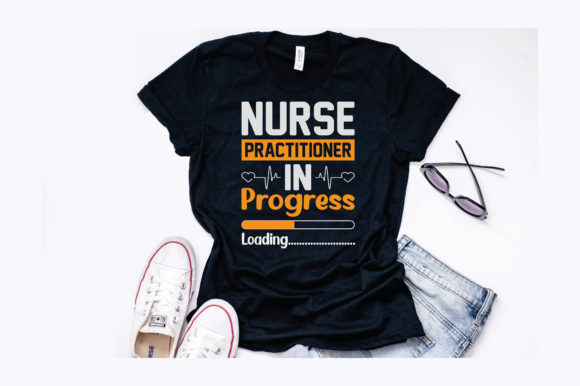
Reviewing the Nurse Practitioner in Progress Design for Real Embroidery
As a designer who has spent years digitizing patterns and testing them on everything from stiff canvas to delicate jersey, I approach every new machine embroidery design with a critical eye. It is not enough for a graphic to look good on a screen; it must survive the needle, the thread tension, and the wash cycle. Recently, I evaluated the Nurse Practitioner in Progress Design to determine its viability for commercial and personal projects. This review breaks down how this specific asset performs when moved from a digital concept to a tangible, stitched reality.
First Impressions and Visual Personality
The initial appeal of the Nurse Practitioner in Progress Design lies in its thematic clarity. For those in the healthcare field, particularly nursing students or newly licensed practitioners, the "in progress" motif resonates deeply. It captures a moment of transition and achievement. Visually, the layout appears balanced, avoiding the clutter that often plagues text-heavy graphics. The mood is celebratory yet professional, making it suitable for a wide range of recipients beyond just the wearer.
When considering this as a T-Shirt Designs asset, the silhouette and line work suggest a modern aesthetic. However, as an embroiderer, I immediately look past the flat image to imagine the texture. How will the curves translate into satin stitch? Will the smaller details hold up as running stitch outlines, or do they require a fill stitch approach? The design’s personality suggests it is meant to be bold and readable, which is crucial for apparel that needs to make a statement from a distance.
Real-World Application Scenarios
To truly test the versatility of this embroidery file, I mentally placed it on several common substrates. The most obvious application is custom apparel. Imagine a high-quality cotton sweatshirt for a graduation gift. The design sits comfortably on the left chest or centered on the back, offering a personalized touch that mass-produced prints cannot match. The thread colors chosen here are vital; using traditional medical blues or scrubs greens against a neutral heather grey fabric creates immediate recognition and professional appeal.
Beyond apparel, consider a sturdy canvas tote bag design. Nursing students carry heavy textbooks and clinical gear. A tote embroidered with this graphic becomes both a functional item and a badge of honor. The durability of embroidery makes it superior to heat transfer vinyl for items that undergo frequent washing and heavy use. Similarly, this could serve as a charming baby embroidery project for a onesie, celebrating the next generation of caregivers, provided the scale is adjusted appropriately for smaller garments.
For Etsy sellers and craft business owners, this design offers multiple revenue streams. It can be marketed as a personalized gift for nurse practitioners, a component of a larger care package, or even adapted for home decor like pillow covers in a nursing student’s dorm room. The key is positioning the finished product as a milestone marker, which increases its perceived value and emotional weight for the buyer.
Technical Considerations for Stitching
While the visual concept is strong, the technical execution requires careful planning. One must assess the stitch density carefully. If the design includes large filled areas, it may pull on lightweight fabrics. For a sweatshirt embroidery project, this is less of an concern due to the fabric's weight and stability. However, if you intend to place this on a thinner material, such as a performance polo or a silky blouse, a robust stabilizer is non-negotiable. I recommend using a cut-away stabilizer for garments that will be washed frequently to prevent puckering over time.
Attention must also be paid to small details. If the design includes fine lettering or intricate icons, verify that they are not too small for your hoop size and machine capabilities. Tiny elements can become lost in the thread buildup or break during stitching. It is wise to run a test stitch-out on scrap fabric of similar weight and texture to your final project. This allows you to check for thread breaks, tension issues, and overall clarity before committing to the final piece.
Another critical factor is color contrast. When working on dark fabrics, ensure that the design uses light-colored threads or includes an underlay that prevents the background fabric from showing through gaps in the stitching. Conversely, on white or light fabrics, avoid overly sparse stitching that might look unfinished. Testing the design in black and white mockups can help identify potential visibility issues before you thread the machine.
Commercial Viability and Brand Consistency
For commercial embroidery professionals, consistency is key. The Nurse Practitioner in Progress Design should align with your brand’s quality standards. Does it look professional? Is the stitching clean? These factors directly influence customer trust and repeat business. A well-executed embroidery project enhances the perceived value of the item, allowing for higher price points compared to printed alternatives.
When creating printable mockup assets for your online store, ensure the digital representation matches the physical reality. Misleading images can lead to returns and negative reviews. Use high-quality photos of the actual stitched item on various products like caps, aprons, or towels to show versatility. This transparency builds confidence with potential buyers who are looking for durable, high-quality design assets.
Practical Designer Notes
- Test First: Always stitch a sample on scrap fabric to check tension and density.
- Check Licensing: Verify the license terms provided by the seller. Ensure you have the right to use the design for commercial sales if you are an Etsy seller or run a small shop product line.
- Fabric Choice: Match the fabric texture to the design complexity. Sturdy fabrics like denim or canvas handle dense designs better than thin synthetics.
- Stabilizer Selection: Use appropriate stabilizers to prevent puckering, especially on stretchy or lightweight materials.
- Thread Quality: Use high-quality embroidery thread to ensure colorfastness and durability, particularly for items like holiday embroidery gifts that may be kept for years.
In conclusion, the Nurse Practitioner in Progress Design holds promise for those willing to invest the time in proper setup and execution. It is not just a graphic; it is a tool for storytelling through thread. By understanding its technical requirements and potential applications, designers and makers can create standout pieces that resonate with their audience. Whether for a custom apparel line or a one-off embroidered patch, success lies in the details of preparation and the quality of the final stitch.